Student Ownership Starts with Making: How 3D Printing Builds More Engaged Learners

Give Students More Than Access. Give Them Ownership.
Walk into many school makerspaces and you’ll often see the same pattern: the teacher designs the project, slices the model, sends it to the printer, and hands the finished part back to the student.
Students are involved, but only at the beginning and the end.
Now imagine something different.
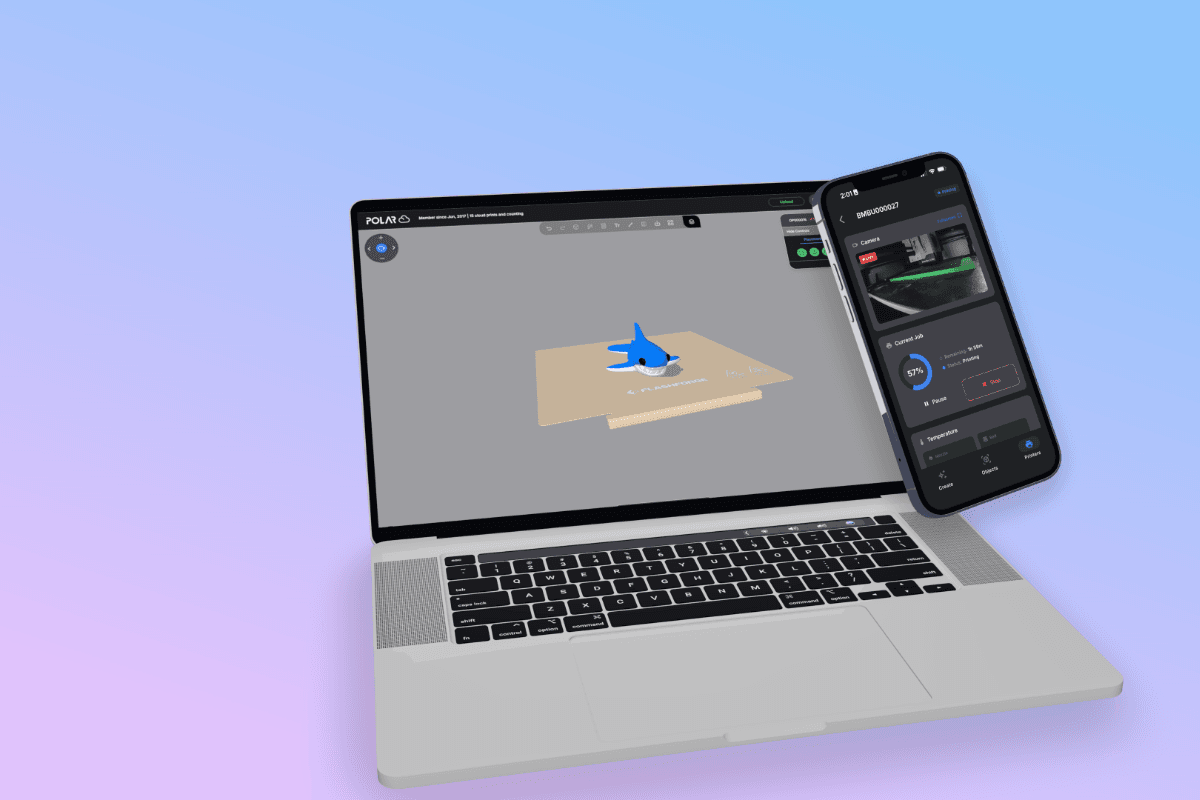
A student designs a part in CAD, uploads it to the Polar Cloud, submits it for teacher approval, watches it enter the print queue, receives a notification when it’s finished, and analyzes the final result before improving the design for version two.
That student isn’t just using a 3D printer.
They’re managing a project.
This is where real engagement begins.
At Polar, we believe the goal isn’t simply to let students print more objects. It’s to help them take ownership of the entire design and manufacturing process while giving educators the tools to keep everything safe, organized, and manageable.
The Hidden Ingredient Behind Great STEM Programs
The best STEM classrooms aren’t memorable because they have expensive equipment.
They’re memorable because students feel that the work belongs to them.
When students know they’re designing something that will actually be manufactured, their thinking changes. They ask better questions. They test more carefully. They revise more willingly because they know every improvement has a real-world impact.
Teachers remain essential throughout the process. They provide guidance, ask thoughtful questions, and create opportunities for success.
But they don’t have to control every mouse click or every print job.
Instead, they create an environment where students can make meaningful decisions while maintaining appropriate oversight.
That’s exactly what the Polar Cloud was built to support.
Controlled Access Creates Independent Learners
Giving students direct access to 3D printers can feel intimidating.
Teachers worry about failed prints, inappropriate files, printer conflicts, and classroom management.
The answer isn’t to lock students out.
The answer is giving them the right level of access.
With the Polar Cloud, educators decide exactly what students can do.
Students can:
- Submit print jobs for approval.
- Monitor printer progress from their own devices.
- Organize and manage their own designs.
- Collaborate on classroom projects.
- Learn how digital manufacturing workflows operate.
Teachers still control approvals, printer permissions, and classroom policies, but students remain active participants instead of passive observers.
The result is a classroom where responsibility grows alongside technical skills.
Seven Things That Happen When Students Own the Printing Process
1. They Become Designers Instead of Assignment Finishers
Students stop asking, “What do I have to make?”
They begin asking, “How can I make this better?”
Ownership naturally encourages creativity, experimentation, and curiosity because students are solving problems they genuinely care about.
2. They Think Like Engineers
Every successful print represents dozens of design decisions. Wall thickness. Supports. Orientation. Material selection. Tolerance.
Students quickly discover that engineering isn’t about getting everything right the first time. It’s about testing, observing, refining, and improving.
3. They Embrace Iteration
Every maker has experienced a failed print.
Instead of seeing failure as the end, students begin seeing it as valuable feedback.
Version one teaches them something. Version two improves it. Version three often surprises them. That iterative mindset extends well beyond 3D printing.
4. They Learn Real Manufacturing Workflows
Professional engineers don’t simply click “Print.”
They submit jobs, manage queues, collaborate with teammates, review designs, and monitor production.
The Polar Cloud introduces these same workflow concepts in an age-appropriate way, helping students understand how modern digital manufacturing actually works.
5. They Collaborate More Naturally
Many classroom projects become stronger when students divide responsibilities. One student models the part. Another validates measurements. Another prepares documentation. Another reviews the print after production.
Cloud-based collaboration allows students to contribute throughout the project rather than waiting for a turn at a single classroom computer.
6. They Become Better Problem Solvers
Every design challenge presents constraints. How do you reduce print time? How do you eliminate supports? How do you strengthen a weak feature?
These questions encourage analytical thinking that transfers into science, mathematics, engineering, and everyday life.
7. They Build Confidence
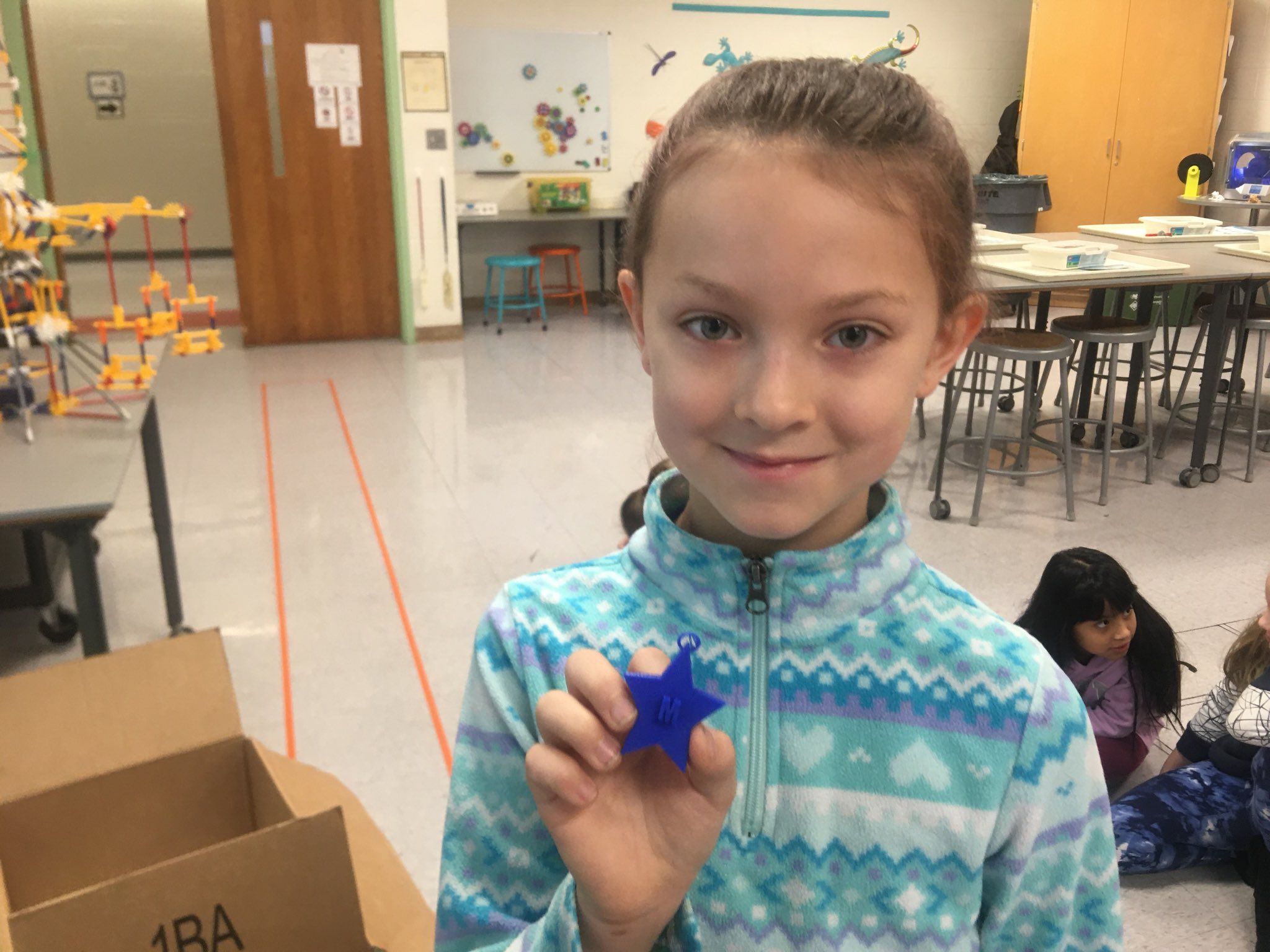
Few classroom experiences are as satisfying as holding something you imagined only hours earlier.
Students quickly realize:
“I designed this.”
“I solved this.”
“I solved this.”
“I made this.”
That confidence often becomes the foundation for future innovation.
Teachers Stay in Control While Students Take the Lead
Student ownership doesn’t mean removing teacher oversight.
It means shifting the teacher’s role.
Instead of acting as the classroom print operator, teachers become facilitators, coaches, and mentors.
The Polar Cloud supports this balance through approval workflows, user permissions, classroom management tools, printer monitoring, and centralized administration across one printer or an entire district.
Students gain authentic responsibility.
Teachers maintain confidence that everything remains organized, secure, and manageable.
Preparing Students for More Than the Classroom
Today’s students will enter careers where digital manufacturing, collaborative design, cloud-based workflows, and rapid prototyping are increasingly common.
Learning how to responsibly manage projects, collaborate with teammates, revise designs, and manufacture physical products develops skills that extend far beyond a single STEM lesson.
Those habits prepare students for engineering, manufacturing, healthcare, architecture, product design, skilled trades, and countless careers that don’t even exist yet.
Ownership Is the Real Innovation
The most powerful thing a 3D printer creates isn’t a prototype or classroom project. It’s confidence.
When schools combine hands-on design with thoughtful teacher guidance and structured access through the Polar Cloud, students stop seeing themselves as consumers of technology. They become creators.
And once students experience what it feels like to bring their own ideas to life, they’re far more likely to keep designing, building, and solving problems long after the printer finishes its last layer.
Subscribe for updates
Get Polar Cloud news and help delivered straight to your inbox.
More from the blog